Enterprise-Grade Agarbatti Manufacturing, Minus the Enterprise Headaches
Every big brand hits the same wall eventually.
You’ve built demand. Retailers want in. Marketplaces are asking for bigger listings. Your D2C numbers are climbing. And then — right when things should feel like a win — your manufacturing partner starts to crack under the pressure.
Missed timelines. Inconsistent batches. A “we’ll try” instead of a “consider it done.” Suddenly, the thing that should be invisible — manufacturing — becomes the loudest problem in the room.
The Real Problem Isn't Demand. It's Supply.
Here’s an uncomfortable truth: most agarbatti manufacturers in India are built for small, steady, local orders — not for the volume, consistency, and speed that a national or export-facing brand actually needs.
That mismatch creates what we call “the enterprise gap” — the space between what your brand needs to scale and what your current supplier is actually capable of delivering.
You see it show up as:
- Batch-to-batch inconsistency in fragrance strength or stick quality
- Delayed fulfillment during festival or peak seasons
- Limited fragrance R&D capabilities
- No real quality certification or documentation
- Communication that feels more like a favor than a partnership
None of this means your brand did something wrong. It usually means you simply outgrew your manufacturer before they were ready to grow with you.
What "Enterprise-Grade" Actually Means for Agarbatti Manufacturing
“Enterprise-grade” isn’t a buzzword here — it’s a specific set of capabilities that separate a hobbyist workshop from a true manufacturing partner:
- Scalable capacity without quality drop-off Whether you need 50,000 sticks or 5 million, the fragrance, the burn time, and the smoke quality should be identical. That consistency is the single hardest thing to manufacture at scale — and the single most important thing for a brand’s reputation.
- Documented quality and compliance Big brands don’t just want good products. They want proof. Certifications, batch testing, and traceable sourcing aren’t optional extras — they’re what lets your procurement and compliance teams sign off with confidence.
- Custom fragrance development, not just fulfillment A true manufacturing partner should be able to build a signature scent for your brand — not just replicate an existing catalog. That’s the difference between a supplier and a partner.
- Predictable timelines, even during peak season Diwali, wedding season, festival spikes — demand for agarbatti isn’t flat. An enterprise-grade manufacturer plans capacity around your growth curve, not just their comfort zone.
- White-label and private-label flexibility Your brand name. Your packaging. Your story. The manufacturing should stay invisible so your brand can stay front and center.
Where Melting Aromas Fits In
This is exactly the space Melting Aromas was built for.
We’re not a garage-scale operation trying to “figure out” bulk manufacturing as we go. We’re the fifth generation of a family that has been making agarbatti since 1910 — which means we’ve already been through the scaling curve, the quality curve, and the seasonal-demand curve more times than most manufacturers have existed.
What makes us different for enterprise and big-brand partners specifically:
- A century-plus of manufacturing know-how, refined across five generations of the same family, so scaling up doesn’t mean starting from zero.
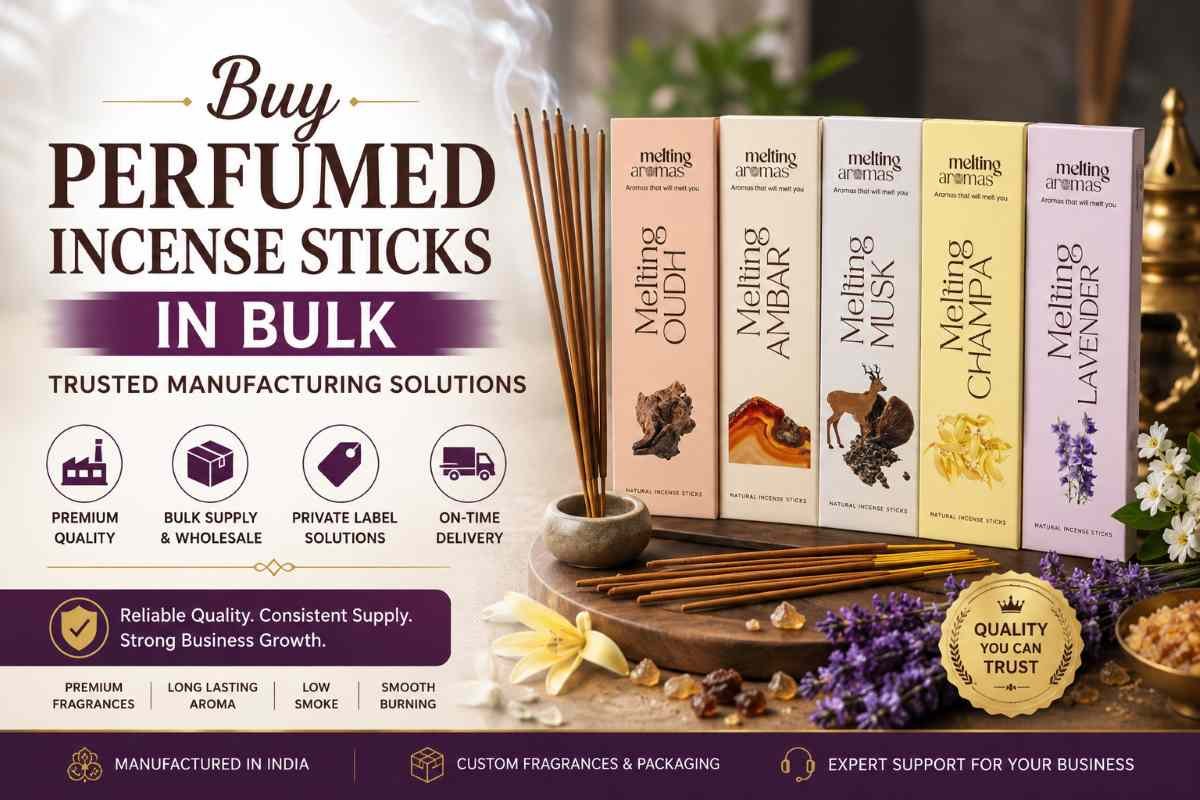
- 100+ fragrance formulations already developed and tested — Melting Series, Sacred Ayur Series, Flora Series, Backflow Series, Dhoop Series, and World Series — plus the ability to build something entirely custom for your brand.
- Quality-certified production, so your compliance team gets the documentation they need, not just a verbal assurance.
- A genuine sustainability story, using flowers recycled from weddings to craft eco-friendly incense — a real ESG angle, not a marketing gloss, for brands that need to answer sustainability questions from their own customers and investors.
- White-label and private-label infrastructure already built out, so your brand identity stays exactly that — yours.
In short: the enterprise capability, without the enterprise-sized headache of finding, vetting, and babysitting a manufacturing partner who’s still learning to scale.
What Working With an Enterprise-Ready Manufacturer Actually Feels Like
It feels like fewer emergency calls. Fewer “we’re a bit behind” messages. Fewer moments where you have to explain to your retail partner why the new batch smells different from the last one.
It feels like being able to say “yes” to a big order without a knot in your stomach.
That’s not a small thing. For a growing brand, manufacturing reliability is often the single biggest hidden lever on whether growth compounds — or stalls.
Frequently Asked Questions
Q1: What's the minimum order quantity for enterprise or bulk manufacturing?
It depends on the product line and customization level, but Melting Aromas is built to handle everything from mid-size bulk orders to large-scale national or export volumes. Reach out with your target numbers and we’ll map out what’s realistic.
Q2: Can you develop a completely custom fragrance for our brand?
Yes. Beyond our existing 100+ formulations across six product series, our team can develop a signature scent tailored to your brand identity — think of it as your own fragrance fingerprint.
Q3: How do you maintain consistency across large production runs?
Through standardized formulation processes, quality checks at each production stage, and certified quality control — the same discipline that’s kept our family’s incense-making reputation intact for over a century.
Q4: Do you offer white-label or private-label packaging?
Absolutely. Your branding, your packaging, your story — we handle the manufacturing behind the scenes so your brand stays front and center with your customers.
Q5: What makes your sustainability angle different from other manufacturers?
Most “eco-friendly” claims in this industry are marketing language. Ours is structural: we source recycled flowers from weddings (through our sister companies in the flower industry) and turn them into incense — a genuine circular process, not just a label.
Q6: How do you handle seasonal demand spikes like Diwali or wedding season?
We plan production capacity around known demand cycles in the incense industry, so festival-season orders don’t turn into a scramble. Advance planning on your end helps us guarantee timelines even further.
Q7: We're an established brand looking to switch manufacturers. How do we start?
Simple — request a quote or get in touch directly. We’ll walk through your current volumes, fragrance needs, and timeline, and map out a transition plan that doesn’t disrupt your existing retail or D2C operations.